


Shopping cart is empty!
SPEED CONTROL OF INDUCTION MOTOR
4 ★
4 ★
2 Ratings
5 ★
0
4 ★
2
3 ★
0
2 ★
0
1 ★
0
(2)
Highlights:
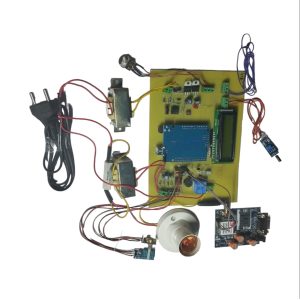
The main intention of this project is to develop an induction motor speed control system which is helpful to control the speed of an induction motor using controller
Highlights:
The main intention of this project is to develop an induction motor speed control system which is helpful to control the speed of an induction motor using controller
SPEED CONTROL OF INDUCTION MOTOR USING ACPWM
4.5 ★
4.5 ★
20 Ratings
5 ★
10
4 ★
10
3 ★
0
2 ★
0
1 ★
0
(20)
Highlights:
This project attempts a new speed control technique for the single-phase a.c. induction motor. It presents a design of a low-cost; high-efficiency drive capable of supplying a single-phase a.c. induction motor with a PWM modulated sinusoidal voltage. The circuit operation is controlled by an 8051 family microcontroller.
Highlights:
This project attempts a new speed control technique for the single-phase a.c. induction motor. It presents a design of a low-cost; high-efficiency drive capable of supplying a single-phase a.c. induction motor with a PWM modulated sinusoidal voltage. The circuit operation is controlled by an 8051 family microcontroller.
All Projects, Android Projects, Electrical Projects, Embedded Projects, Micro Controller, Bluetooth Based Projects
SPEED CONTROL OF INDUCTION MOTOR USING ANDROID
4.5 ★
4.5 ★
20 Ratings
5 ★
9
4 ★
11
3 ★
0
2 ★
0
1 ★
0
(20)
Highlights:
The main intention of this project is to develop an induction motor speed control system which is helpful to control the speed of an induction motor using TRIAC.
Highlights:
The main intention of this project is to develop an induction motor speed control system which is helpful to control the speed of an induction motor using TRIAC.
All Projects, Core Electronics Projects, Electrical Projects, Core Electrical Projects, Micro Controller, Electronic Products
Speed Control Of Induction Motor Using Firing Angle Control
4.3 ★
4.3 ★
3 Ratings
5 ★
1
4 ★
2
3 ★
0
2 ★
0
1 ★
0
(3)
Highlights:
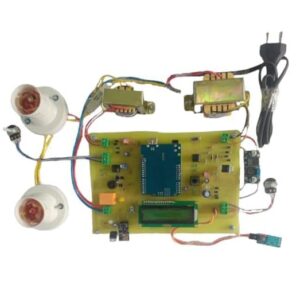
The main object of this project is to develop speed control of two induction motor using firing angle control system which is helpful to control the speed of an induction motor using microcontroller
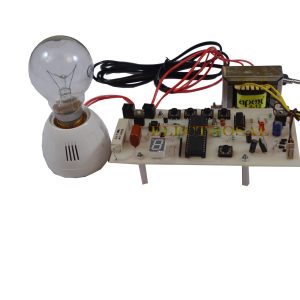
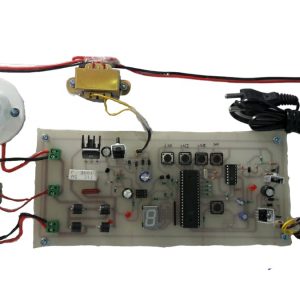
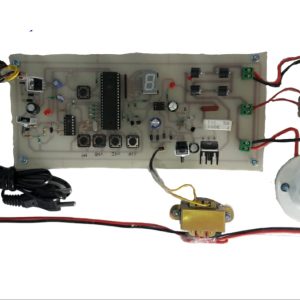
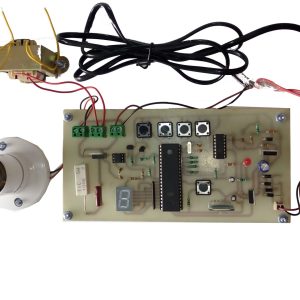
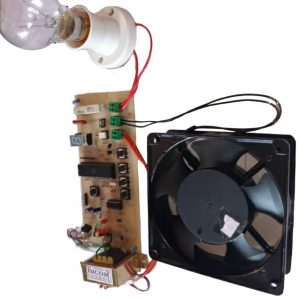
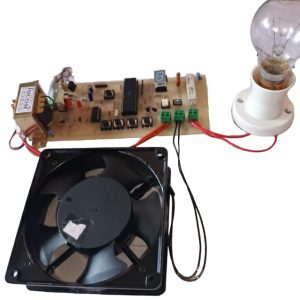
In this project, the zero-crossing point of the voltage waveform is detected by a comparator whose output is then fed to the microcontroller. Then, it provides the required delayed triggering pulses to a pair of TRIAC through an opto-isolator connected to this circuit. Finally, power is applied to the load through the TRIAC. Four push-button switches are interfaced to the controller for increasing and decreasing the AC power to the load. In this project, a lamp is used in the place of induction motor demonstration purposes. The motor speed variation depends on the power reduction.
Highlights:
The main object of this project is to develop speed control of two induction motor using firing angle control system which is helpful to control the speed of an induction motor using microcontroller
In this project, the zero-crossing point of the voltage waveform is detected by a comparator whose output is then fed to the microcontroller. Then, it provides the required delayed triggering pulses to a pair of TRIAC through an opto-isolator connected to this circuit. Finally, power is applied to the load through the TRIAC. Four push-button switches are interfaced to the controller for increasing and decreasing the AC power to the load. In this project, a lamp is used in the place of induction motor demonstration purposes. The motor speed variation depends on the power reduction.
Speed control of stepper motor using 8051 microcontroller
4.6 ★
4.6 ★
5 Ratings
5 ★
3
4 ★
2
3 ★
0
2 ★
0
1 ★
0
(5)
All Projects, Core Electronics Projects, Electrical Projects, Embedded Projects, Micro Controller, PIC Microcontroller, Electronic Products
SPEED CONTROL OF TWO INDUCTION MOTOR USING ACPWM
4.7 ★
4.7 ★
3 Ratings
5 ★
2
4 ★
1
3 ★
0
2 ★
0
1 ★
0
(3)
Highlights:
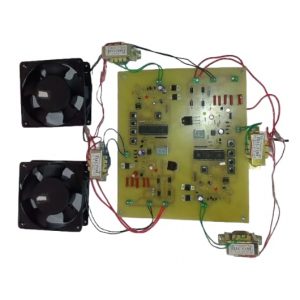
This project attempts a new speed control technique for the single-phase a.c. ????induction motor. It presents a design of a low-cost; high-efficiency drive capable of supplying a single-phase a.c. ????induction motor with a PWM modulated sinusoidal voltage. The circuit operation is controlled by an 8051 family microcontroller. The device is aimed at substituting the commonly used triac phase angle control drives. The circuit is capable of supplying a single-phase a.c. induction motor (or general a.c. inductive/resistive load) with varying a.c. voltage. The same as in triac control, the voltage applied to the load can be varied from zero to maximum value. On the other hand, it uses a pulse width modulation technique (PWM), and when compared with the phase angle control used for triacs, produces much lower high order harmonics.
Highlights:
This project attempts a new speed control technique for the single-phase a.c. ????induction motor. It presents a design of a low-cost; high-efficiency drive capable of supplying a single-phase a.c. ????induction motor with a PWM modulated sinusoidal voltage. The circuit operation is controlled by an 8051 family microcontroller. The device is aimed at substituting the commonly used triac phase angle control drives. The circuit is capable of supplying a single-phase a.c. induction motor (or general a.c. inductive/resistive load) with varying a.c. voltage. The same as in triac control, the voltage applied to the load can be varied from zero to maximum value. On the other hand, it uses a pulse width modulation technique (PWM), and when compared with the phase angle control used for triacs, produces much lower high order harmonics.
Stepper Motor Speed Control Using GSM & Arduino
5 ★
5 ★
2 Ratings
5 ★
2
4 ★
0
3 ★
0
2 ★
0
1 ★
0
(2)
Highlights:
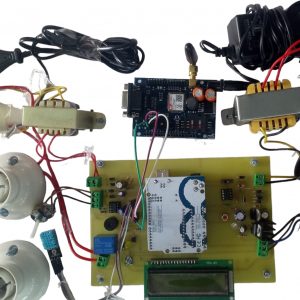
Our proposed project allows user to control the speed and direction of a stepper motor remotely from anywhere. The system works by receiving stepper motor control instructions from user through an SMS message.
Highlights:
Our proposed project allows user to control the speed and direction of a stepper motor remotely from anywhere. The system works by receiving stepper motor control instructions from user through an SMS message.
All Projects, Automation Projects, IR Based Projects, Electrical Projects, Core Electrical Projects, Power Electronics, Embedded Projects, Micro Controller, School project
STREET LIGHT THAT GLOWS ON DETECTING VEHICLE MOVEMENT
4.1 ★
4.1 ★
25 Ratings
5 ★
4
4 ★
20
3 ★
1
2 ★
0
1 ★
0
(25)
Highlights:
This project is designed to detect a vehicle movement on road to switch on only a block of street lights that are ahead of the vehicle, and to switch off the glowing lights when the vehicle passes away from the lights. This will help to save electrical energy.
Highlights:
This project is designed to detect a vehicle movement on road to switch on only a block of street lights that are ahead of the vehicle, and to switch off the glowing lights when the vehicle passes away from the lights. This will help to save electrical energy.
All Projects, Sensor Based Projects, Arduino Projects, Communication, Electrical Projects, Temprature Based Projects, Core Electrical Projects, GSM Based Projects, Electronic Products
SUBSTATION MONITORING OVER GSM WITH FLOOD AND EARTH QUICK DETECTION
4.4 ★
4.4 ★
5 Ratings
5 ★
2
4 ★
3
3 ★
0
2 ★
0
1 ★
0
(5)
All Projects, IOT Projects, DHT Sensor Based Projects, Arduino Projects, Core Electronics Projects, Electrical Projects, Core Electrical Projects
SUBSTATION MONITORING OVER IOT
4.6 ★
4.6 ★
30 Ratings
5 ★
17
4 ★
13
3 ★
0
2 ★
0
1 ★
0
(30)
Highlights:
The purpose of this project is to acquire the remote electrical parameters like voltage, current and frequency and send these real time values over network along with temperature at power station. This project is also designed to protect the electrical circuitry by operating a relay.
Highlights:
The purpose of this project is to acquire the remote electrical parameters like voltage, current and frequency and send these real time values over network along with temperature at power station. This project is also designed to protect the electrical circuitry by operating a relay.
All Projects, DHT Sensor Based Projects, Arduino Projects, Core Electronics Projects, Electrical Projects, Core Electrical Projects, GSM Based Projects, Electronic Products
SUBSTATION MONITORING USING ARDUINO OVER GSM
4.6 ★
4.6 ★
30 Ratings
5 ★
17
4 ★
13
3 ★
0
2 ★
0
1 ★
0
(30)
All Projects, Automation Projects, LDR Sensor Based Projects, Sensor Based Projects, Arduino Projects, Solar Based Projects, Electronic Products, Mechatronics
SUN TRACING SOLAR PANEL IN TWO AXIS USING ARDUINO AND SERVO MOTORS
4.5 ★
4.5 ★
20 Ratings
5 ★
10
4 ★
10
3 ★
0
2 ★
0
1 ★
0
(20)
Highlights:
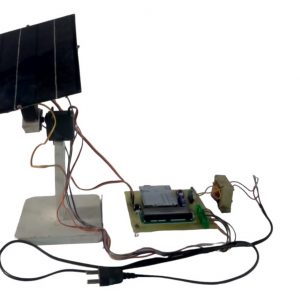
The variation in the solar energy occur daily due to variation in day night cycle and also because of seasonal variations through out the year. Population of the world is increasing very rapidly. From past decade of years the non renewable energy sources like coal and oil are extinguishing and so it become serious problem for providing he reliable energy to the world. But solar energy plays important source of primary energy. In this project we propose dual axis solar tracking system by which it is possible to catch maximum amount of solar energy by using Arduino as main processing unit.
Highlights:
The variation in the solar energy occur daily due to variation in day night cycle and also because of seasonal variations through out the year. Population of the world is increasing very rapidly. From past decade of years the non renewable energy sources like coal and oil are extinguishing and so it become serious problem for providing he reliable energy to the world. But solar energy plays important source of primary energy. In this project we propose dual axis solar tracking system by which it is possible to catch maximum amount of solar energy by using Arduino as main processing unit.